Views: 0 Author: Site Editor Publish Time: 2026-07-23 Origin: Site
Handling highly viscous materials presents a severe operational reality for process engineers. Moving substances like bitumen, molten sulfur, polymers, or chocolate requires strict temperature maintenance. Without constant heat, you face rapid media solidification, devastating line blockages, and catastrophic pump failures. Standard insulated components simply fail in these intense high-viscosity applications. Passive insulation only slows heat loss over time. Active heat transfer is strictly required to keep these heavy fluids moving smoothly through the pipeline.
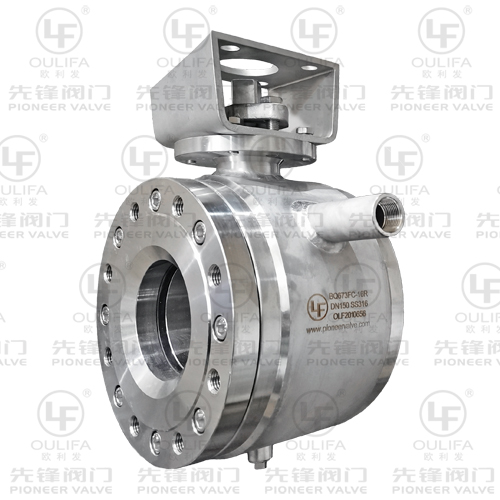
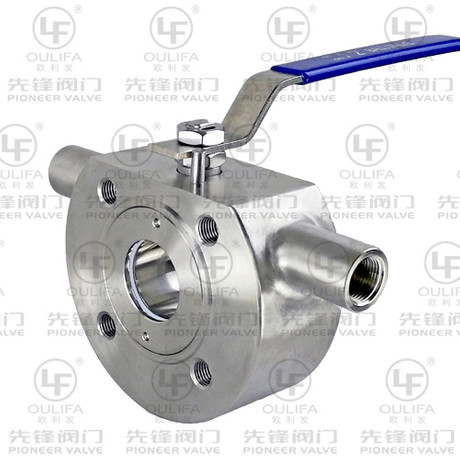
Industry professionals rely heavily on Heating Jacket Ball Valves as the definitive solution for maintaining optimal fluid dynamics. These specialized units actively inject thermal energy directly into the flow path. In this guide, we will explore exactly how you can evaluate various jacket designs. You will also learn how to match heating media to your specific process and select highly capable manufacturing partners.
Primary function: Heating jacket ball valves utilize a secondary outer shell to circulate steam, thermal oil, or hot water, preventing media crystallization during transport.
Evaluation focus: Success depends on matching the heating medium to the jacket design (full vs. partial) and ensuring full-bore flow paths to eliminate pressure drops.
Sourcing priority: Selecting an OEM Ball Valve manufacturer requires verifying material traceability (MTRs), pressure testing compliance (API 598), and actuator integration capabilities.
Risk mitigation: Proper installation requires accounting for thermal expansion and isolating electric or pneumatic actuators from the valve's high-temperature zone.
Viscous fluids fundamentally resist flow. When temperatures drop below a critical threshold, substances like molten sulfur or asphalt rapidly transition from fluid to solid. This crystallization creates immediate and severe operational emergencies. Facilities experience unexpected system downtime, forcing production lines to halt entirely. Solidified media also creates immense internal pressure blockages. These blockages dramatically elevate pipe rupture risks, endangering plant personnel and surrounding equipment.
The manual cleaning labor required to remediate a blocked line is extensive and dangerous. Maintenance crews must physically dismantle piping sections. They often use blowtorches or hazardous chemical solvents to clear crystallized buildup. Standard valves covered by passive fiberglass insulation cannot prevent this scenario. Passive insulation relies on the fluid's initial heat. Over long pipe runs, thermal energy inevitably escapes. The fluid loses its required kinematic viscosity.
Active heat injection solves this problem. A jacketed valve provides continuous thermal energy transfer directly into the valve body. This external heat source ensures the media remains fluid, regardless of ambient conditions or intermittent flow halts.
A successful implementation meets three specific performance criteria:
Zero Cold Spots: The valve body maintains a uniform temperature profile, completely eliminating localized freezing zones near the seats or stem.
Stable Flow Rates: Media viscosity remains perfectly constant, allowing downstream pumps to operate efficiently without surging or cavitation.
Seamless Integration: The jacketed unit connects directly into the existing plant heating infrastructure, utilizing available steam loops or thermal oil headers safely.
Engineers must carefully match the heating medium to the specific process requirements. The wrong heating method can degrade sensitive media or create unnecessary safety hazards.
Steam remains the dominant heating medium in petrochemical and heavy industrial applications. Facilities heavily utilize steam because it delivers extraordinary latent heat transfer. When steam condenses inside the jacket, it rapidly releases massive amounts of thermal energy into the valve body.
Best for: Refineries, chemical processing plants, and sulfur recovery units.
Pros: Delivers rapid heating cycles and utilizes existing boiler infrastructure. It quickly overcomes sudden temperature drops.
Cons: Demands robust pressure management. Condensate buildup requires continuous steam trap maintenance. Improper trap operation leads to water hammer, severely damaging the jacket.
Some applications require extremely high temperatures but cannot tolerate high system pressures. Thermal oil (hot oil) provides the ideal solution. Unlike steam, thermal oil does not flash into a vapor. It circulates as a hot liquid, transferring sensible heat evenly across the valve body.
Best for: Asphalt loading terminals, specialized resin manufacturing, and polymer extrusion lines.
Pros: Offers highly stable temperature control. It operates at very low pressures, significantly reducing mechanical stress on the jacket welds.
Cons: Requires a dedicated, closed-loop pumping system. Fluid leaks pose environmental and fire risks, demanding specialized sealing technologies.
When facilities lack central boilers or thermal fluid heaters, electric heating jackets provide localized control. These units utilize internal heating elements or external heat-tracing cables encapsulated within a specialized housing.
Best for: Food and beverage processing, chocolate manufacturing, or isolated remote pumping stations.
Pros: Delivers exceptional precision and clean operation. Operators can dial in exact temperature setpoints effortlessly.
Cons: Generally involves higher operating electricity costs. Hazardous environments mandate stricter explosion-proof (ATEX) compliance, significantly complicating the electrical design.
Heating Medium | Heat Transfer Mechanism | Pressure Profile | Primary Maintenance Focus |
|---|---|---|---|
Steam | Latent heat (condensation) | High (increases with temperature) | Steam trap functionality, condensate drainage |
Thermal Oil | Sensible heat (liquid flow) | Low (pump circulation pressure) | Fluid degradation, leak prevention at joints |
Electric | Resistive heating | None (atmospheric) | Element integrity, electrical contact safety |
Specifying these highly specialized components requires careful engineering oversight. Standard valve metrics do not fully capture the complexity of thermal fluid handling. You must evaluate the physical geometry and material science behind the jacket itself.
Buyers must first determine the required jacket coverage. A partial jacket covers only the central body segment. It provides adequate heat for mildly viscous fluids operating in moderate climates. However, highly sensitive media requires a full jacket design. Full jackets extend completely from one flange to the opposite flange. This comprehensive coverage envelops the entire flow path, eliminating freezing risks at the critical pipeline connection points.
Viscous applications heavily favor full port designs. Also known as full bore, this design ensures the internal diameter of the ball exactly matches the internal diameter of the connected pipeline. Reduced bore valves create artificial bottlenecks. These bottlenecks increase fluid friction, generate severe pressure drops, and promote material buildup behind the ball. A full bore design guarantees unobstructed flow, allowing facilities to run pipeline cleaning pigs through the system without removing the valve.
Adding an outer steel shell drastically changes the valve's exterior profile. To accommodate the bulky jacket casing, manufacturers utilize oversized flanges. For example, a 2-inch internal valve body will typically feature 3-inch connection flanges. This oversized configuration ensures installation crews have adequate physical clearance to insert standard wrench tools and tighten flange bolts properly. Failing to specify oversized flanges results in impossible installation scenarios where the jacket blocks bolt access.
Thermal cycling stresses valve materials intensely. Engineers base their selection logic on the specific process environment. Carbon Steel (WCB) serves as the standard choice for general high-temperature applications like asphalt or heavy fuel oil. However, corrosive environments or sanitary operations demand Stainless Steel (CF8M or 316). Stainless steel prevents internal degradation when handling aggressive chemicals and meets strict cleanliness standards required for food-grade chocolate or edible oils.
Purchasing jacketed units off the shelf often leads to catastrophic field failures. You must source these components from a dedicated OEM Ball Valve manufacturer possessing distinct engineering capabilities.
Shortlist suppliers based on their vertical integration. The best manufacturers control their in-house casting, CNC machining, and quality control processes. When a supplier outsources jacket welding to third-party shops, quality inconsistency skyrockets. Look for facilities demonstrating dedicated welding stations specifically calibrated for pressurized jacket assembly.
Verifiable standards separate premium manufacturers from low-tier suppliers. Ensure your chosen partner fully complies with ASME B16.34, which governs pressure-temperature ratings for flanged, threaded, and welding end valves. They must also execute rigorous API 598 testing protocols. API 598 dictates mandatory valve inspection and leakage testing parameters. Furthermore, general facility operations should fall under an active ISO 9001 quality management framework.
Viscous processes frequently require automated control. Evaluate the manufacturer's ability to supply pre-integrated electric or pneumatic actuators. A capable OEM will engineer custom mounting hardware tailored to the thermal constraints of your process. They will also customize the jacket's heating media connections. Depending on your plant standards, you may require threaded NPT ports, specialized flanged connections, or direct socket-weld fittings for the heating fluid.
Thermal stress exploits microscopic impurities in metal castings. Consequently, material traceability becomes a non-negotiable requirement. Reputable suppliers provide comprehensive Material Test Reports (MTRs) according to EN 10204 3.1 standards. These documents verify the exact chemical composition and physical yield strength of the steel. Never install a jacketed component lacking fully traceable metallurgical documentation.
Even perfectly manufactured units will fail if improperly installed or poorly maintained. Facility managers must account for the physical realities of severe thermal applications.
The inner valve body handles process media while the outer jacket handles the heating fluid. These two zones often operate at drastically different temperatures. This differential creates unequal thermal expansion. The inner core may expand faster than the outer shell, placing immense mechanical shear stress on the connecting welds. Premium manufacturers mitigate this engineering reality by utilizing stress-relieved welds and specialized joint designs. Installation teams must also utilize proper pipeline expansion joints to prevent external piping loads from warping the valve body.
Heat rises naturally. Radiant heat transfers directly from the valve body up through the stem into the actuator assembly. Pneumatic actuator seals melt, and electric actuator circuit boards fry under these extreme temperatures. You must utilize extended mounting brackets, commonly known as standoffs. These simple physical extensions create an air gap, distancing sensitive electronic or elastomeric components from the aggressive high-temperature zone.
A common engineering oversight involves inadequate physical space. Planners often forget the jacket requires its own dedicated piping network. Crews need ample room to route steam supply lines and condensate return pipes into the jacket ports. Before installation, confirm the pipeline layout provides sufficient vertical and horizontal clearance for this auxiliary piping.
Establish a proactive maintenance schedule immediately upon installation. Technicians should routinely inspect jacket weld seams for micro-fractures. They must also verify steam trap functionality constantly. A failed closed steam trap floods the jacket with cool condensate, instantly creating a cold spot and freezing the process media. A failed open trap wastes expensive steam and erodes internal jacket walls.
Implementation Risk | Engineering / Maintenance Mitigation |
|---|---|
Thermal weld fracturing | Specify stress-relieved factory welds; use pipeline expansion joints. |
Actuator seal failure | Install extended mounting brackets (standoffs) to create a thermal air gap. |
Media freezing inside valve | Implement strict steam trap monitoring; specify full-jacket designs. |
Flange bolt interference | Specify oversized connection flanges during the initial procurement phase. |
Specifying Heating Jacket Ball Valves represents a complex exercise in thermal engineering as much as standard fluid control. You cannot simply drop a heated unit into a pipeline and expect seamless operation. Process stability requires careful coordination between process fluid characteristics, selected heating media, and physical valve geometry.
As a next-step action, facility engineers should meticulously consolidate their exact flow data before approaching manufacturers. Document your specific media type, baseline flow rate, required temperature maintenance range, and available plant heating infrastructure. Armed with this data, you can engage suppliers productively.
Take immediate action by requesting comprehensive technical drawings from shortlisted suppliers. Demand precise pressure drop calculations and ask for sample MTRs to verify their quality control processes. Proper upfront engineering guarantees long-term operational success and eliminates the severe risks associated with viscous fluid handling.
A: The jacket design pressure operates independently from the primary line pressure. While the internal valve may carry a Class 300 rating for process media, the outer jacket is typically designed to handle standard utility pressures. Jackets usually carry ratings around 150 PSI (10 Bar) to safely contain standard saturated steam or circulating thermal oil.
A: We strongly advise against aftermarket retrofitting. Welding a jacket onto a standard valve body in the field alters the metal's temper and compromises pressure boundary integrity. Factory-engineered jacketed valves feature specific wall thicknesses and undergo rigorous post-weld heat treatment to ensure safety under thermal stress.
A: Manufacturers utilize specialized high-temperature seat materials like PEEK or engineered metal-to-metal seating. Additionally, they incorporate live-loaded stem packing systems. Belleville washers continuously apply mechanical force to the packing rings, compensating for material expansion and contraction during extreme thermal cycling.
A: Yes, adding a jacket usually alters standard dimensions. Because the design requires oversized flanges to accommodate the jacket shell, the face-to-face length rarely matches standard unjacketed valves. You must review the manufacturer's dimensional drawings closely, as these are rarely drop-in replacements for existing standard piping gaps.